

To get into sports journalism, start doing reportable work and put it through editing. Cover an event you can access, check the facts, meet the agreed deadline and revise the draft after feedback. Keep the finished piece with a clear account of what you contributed.
You do not need your first assignment to involve a famous team. You need an assignment that lets you practice reporting and produce work another person can assess. A small local story with strong sourcing can reveal more about your ability than an ambitious piece assembled from other people’s coverage.
Choose reporting as the skill you are building
Sports media includes announcing, production, communications and other work. Decide whether your immediate goal is to find and verify stories. Our sports journalism guide explains how that work differs from a personal reaction or a team’s announcement.
For a beginning reporter, useful practice includes accurate notes, specific interview questions and a clear account of what happened. Knowing a sport helps you recognize a development worth investigating. It does not replace checking the result or asking a participant to explain a decision.
Choose one reporting weakness to work on during the next assignment. If your stories rely heavily on official announcements, plan an additional interview. If your drafts are hard to follow, ask an editor to review the order of the information. Keep the goal small enough that you can tell whether you addressed it.
Evaluate education through the work it enables
The Bureau of Labor Statistics describes a bachelor’s degree as the typical entry education for reporters and journalists. It also identifies internships and student-media experience as potentially helpful. That describes a common occupational route, not an absolute rule for every assignment or employer.
If you are comparing programs, look beyond the course title. Find out whether students report for a functioning publication, receive detailed editing and learn to work with records as well as interviews. Ask what work students actually produce and how responsibility increases as they gain experience.
If you are already enrolled, start with the student publication or station. Ask how a new contributor receives an assignment and who edits the work. If you are outside college, investigate local publications and training opportunities with the same questions about reporting, supervision and feedback.
Find an assignment you can repeat
A regular, manageable assignment gives you a chance to apply the last edit to the next story. That could mean covering an accessible community competition or following one local sports issue. Confirm the publication’s needs before assuming it wants a recap of every event.
Send a specific pitch. Name the proposed story, why it matters to that outlet’s readers, the sources you expect to approach and the delivery date you can meet. Be honest about your experience. A short proposal with a feasible reporting plan is easier to discuss than a general request to do anything in sports.
Before accepting, clarify the assignment’s scope, deadline, pay if any, expenses and editing process. Confirm access arrangements separately with the organizer. Being assigned a story does not automatically give you a credential or permission to enter a restricted area.
Build clips that show your contribution
A clip is an example of your published work. Save the link, publication name and date. For a team-produced video or audio piece, explain your own role. Keep a permitted copy for your records, because a publication’s website can change.
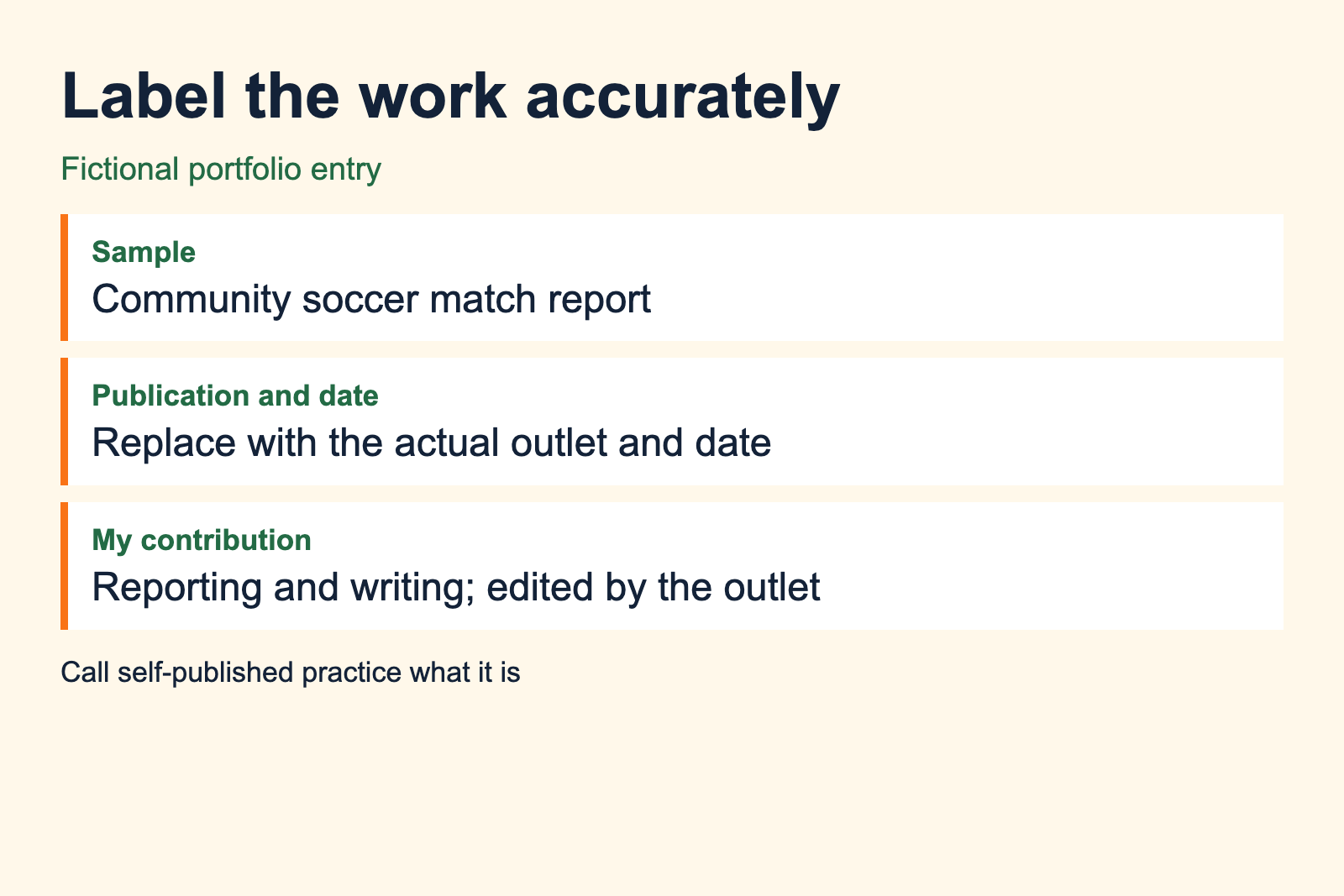
The APSE student contest’s 2026 rules provide a dated example of this distinction: multimedia entrants had to explain their contribution. The contest also distinguished game coverage from feature or enterprise work. Its April 11, 2026 deadline has passed; these are examples of how work was assessed, not an invitation to enter now.
Choose samples that show different reporting tasks when the application allows it. A game report can show deadline accuracy. A reported feature can show how you developed a subject beyond the result. A self-published practice piece can be useful, but label it accurately rather than implying that an editor commissioned or published it.
Follow the actual application instructions
The Associated Press careers page gives examples of application materials, including work samples and a reference. As checked in September 2026, the page says plans for its 2027 internship program are expected early the following year. Check the current notice before treating any listed material as an open application.
For each opportunity, record the eligibility rules, deadline and requested file or link format. Select the samples that fit that role. Do not assume one organization’s preferred sample count applies everywhere, and do not send a large archive when a reviewer asks for a few pieces.
Open your portfolio links in a signed-out browser. Check that the reader reaches the work, can identify your byline or contribution and does not hit an unexpected permission request. If a sample requires access, follow the recipient’s instructions for providing it.
Check the practical terms before committing
An appealing title can hide an assignment that gives you little reporting practice. Ask who will edit your work and what feedback you can expect. Find out whether you will originate stories, rewrite supplied material or perform another task. Each can involve work, but they build different evidence.
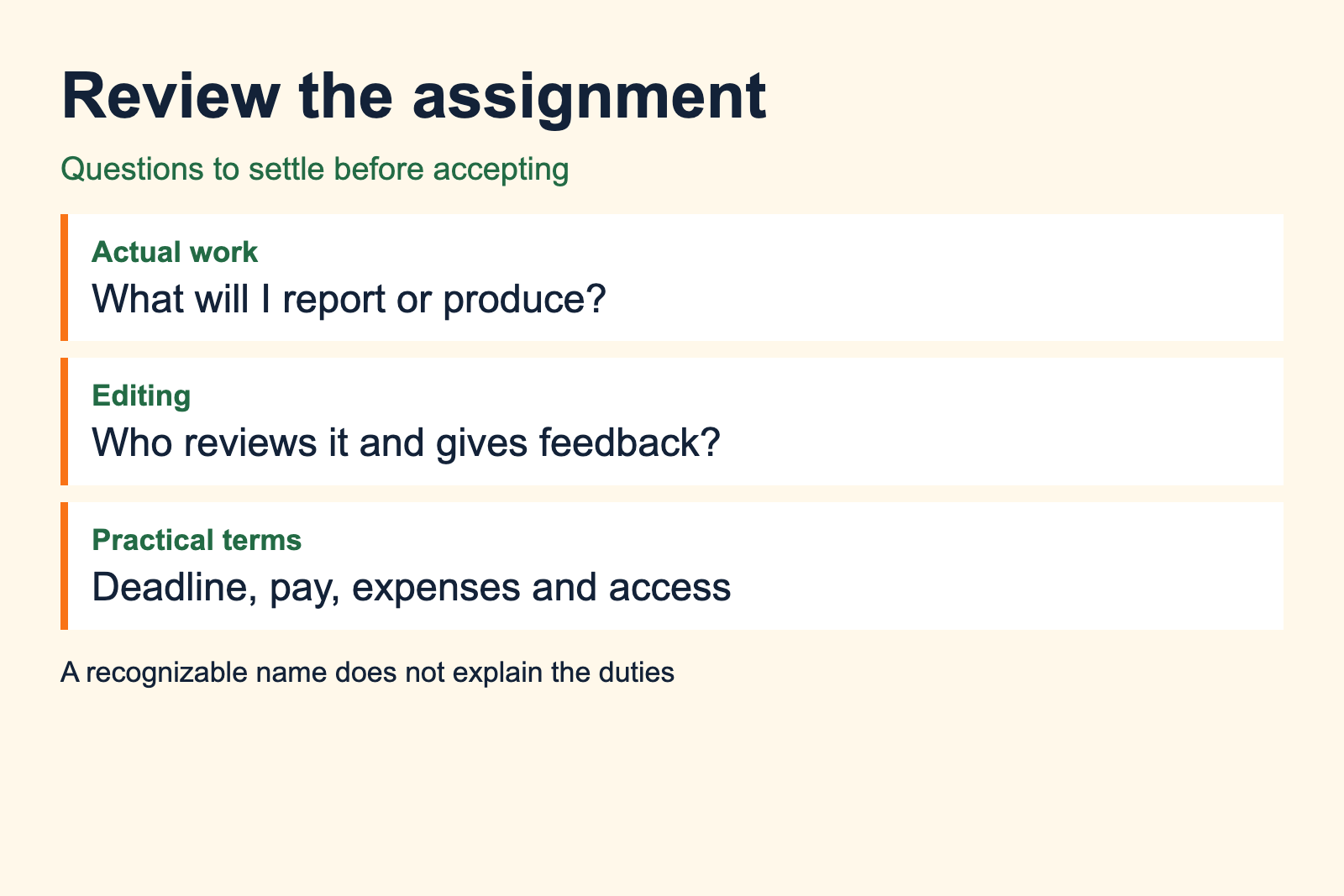
Consider the real schedule, travel and expenses alongside any payment. Keep the commitments specific enough to compare with your available time. Do not assume an unpaid placement will become a paid position, or that association with a recognizable organization proves you will receive useful instruction.
Make the next assignment better
After an edit, record the change you can apply again. Perhaps the editor needed clearer attribution or removed a claim your notes did not support. Use the sports article writing guide to check the next draft before filing it.
Keep pitching work you can complete responsibly, and update your portfolio as stronger pieces replace weaker ones. The aim is a body of accurate, clearly credited reporting, with evidence that you can respond to editing and deliver the assignment you agreed to do.
As your work develops, keep the strongest relevant pieces in a sports media portfolio. Explain the reporting you did and make each sample easy to open.
Sources
- U.S. Bureau of Labor Statistics, reporter and journalist occupational guidance, accessed September 2026.
- Associated Press careers and internship guidance, accessed September 2026. Availability can change.
- Associated Press Sports Editors, 2026 student contest rules, March 29, 2026. Closed contest used as a historical portfolio example.