
A listener should be able to follow the game without looking at your screen. When you learn how to do play-by-play, start there: identify the player, describe the action and give its result. Prepare a short set of notes, record a practice call, then listen for the places where someone would lose track.
Your first recording can be private. Choose a sport you understand and a short passage of action. Leave the dramatic finish for later; first find out whether your description makes sense from one play to the next.
Prepare notes you can scan
Put the information you expect to need on one page. Keep player names beside their numbers and leave room to add a correction. Confirm pronunciations with a reliable team source before the assignment. A guess written neatly is still a guess.
At a 2026 Emerson workshop, broadcaster Tim Neverett described preparation that includes player and coach conversations and organized reference notes. His point about storytelling gives those notes a purpose: useful context should help explain the game the audience is following.
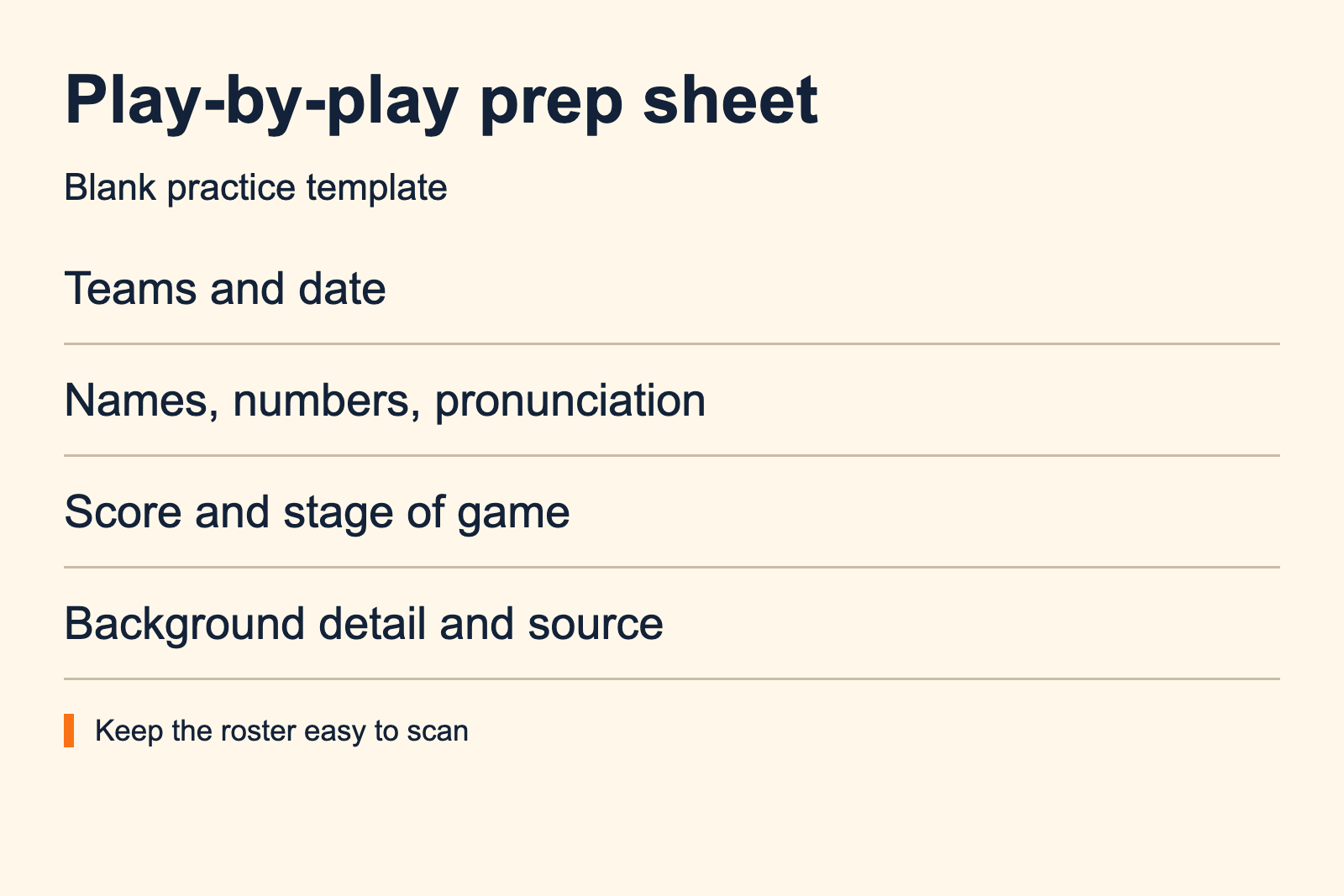
For your practice sheet, use these fields:
- Teams, venue and the date of the recording
- Player numbers, names and pronunciation notes
- The score and the game’s current stage
- One verified background detail with its source
Keep the background note separate from the roster. You need to find a name quickly during action. A paragraph of biographical information in the same space makes that small task harder.
If preparation time is short, Jon Chelesnik’s short-notice broadcast advice recommends learning key players first. Use that as a priority decision while keeping the full roster available. Before you record, point to a number on the sheet and say the corresponding name aloud. Reorganize any entry you struggle to locate.
Describe the action in order
Practice saying who has the ball, where the action is happening and what changes. Use the sport’s ordinary terms. Southern Utah University’s spring 2026 broadcasting syllabus treats descriptive terminology and the differences between radio and television as separate learning tasks.
For an audio-only call, include enough location to make the movement understandable. On a video call, listen for words that merely repeat an obvious picture. Try both versions of the same passage and compare how much information each needs.
This fictional basketball sequence is a practice example:
Reed brings it up the right side. Passes to Ellis at the top. Ellis drives left, pulls up, and the shot comes off the rim. Morgan takes the rebound for West.
The names and action are invented. The exercise is to keep each sentence attached to something observable. Record your own version against actual footage and check whether your words finish before the next event demands attention.
Once the passage ends, reset the listener with the team names and score. Choose a pause where that information fits. This guide does not prescribe a universal interval; the useful test is whether someone joining your recording can understand the situation.
Handle a missed detail
If you cannot identify a player, describe the action you can see. Check the name at the next opportunity. Avoid adding an explanation of intent when the picture only establishes a movement or result.
The D.C. Public Schools, Prime Movers and RTNDF radio lesson emphasizes fair, accurate coverage. Apply that standard to corrections too. If you called Ellis but the player was Reed, make the correction plainly: “That was Reed on the pass.” Then return to the next play.
During review, distinguish a wrong name from a late name. The first needs an accuracy fix. The second might mean your roster is difficult to scan, or you started a background story while play was moving. Write down what happened at that moment before deciding what to change.
Record a short practice call
Use a five-minute passage as a manageable first exercise. Five minutes is a suggested practice length, not a measured training requirement. Pick footage you can watch privately and keep your recording private unless you have permission to distribute the material it includes.
Mute the original commentary. Place your notes where you can read them without covering the action. Make a short test recording, play it back, and confirm your voice is audible before continuing. You can use the recording equipment already available to you for this exercise.
Call the passage once without stopping to restart a sentence. When you miss something, carry on and mark the time afterward. Repeatedly recording only the opening will tell you little about handling an unexpected moment.
For a second pass, choose one change. You could shorten the background material or move pronunciation notes beside the names. Record the same passage again so you can compare the effect of that specific adjustment. The On-Air & Broadcasting track collects the related preparation and commentary guides.
Review what the listener heard
Listen once without watching the footage. Note the exact point where you lose the ball’s location, a player’s identity or the result. Then replay with the picture to find the missing information.
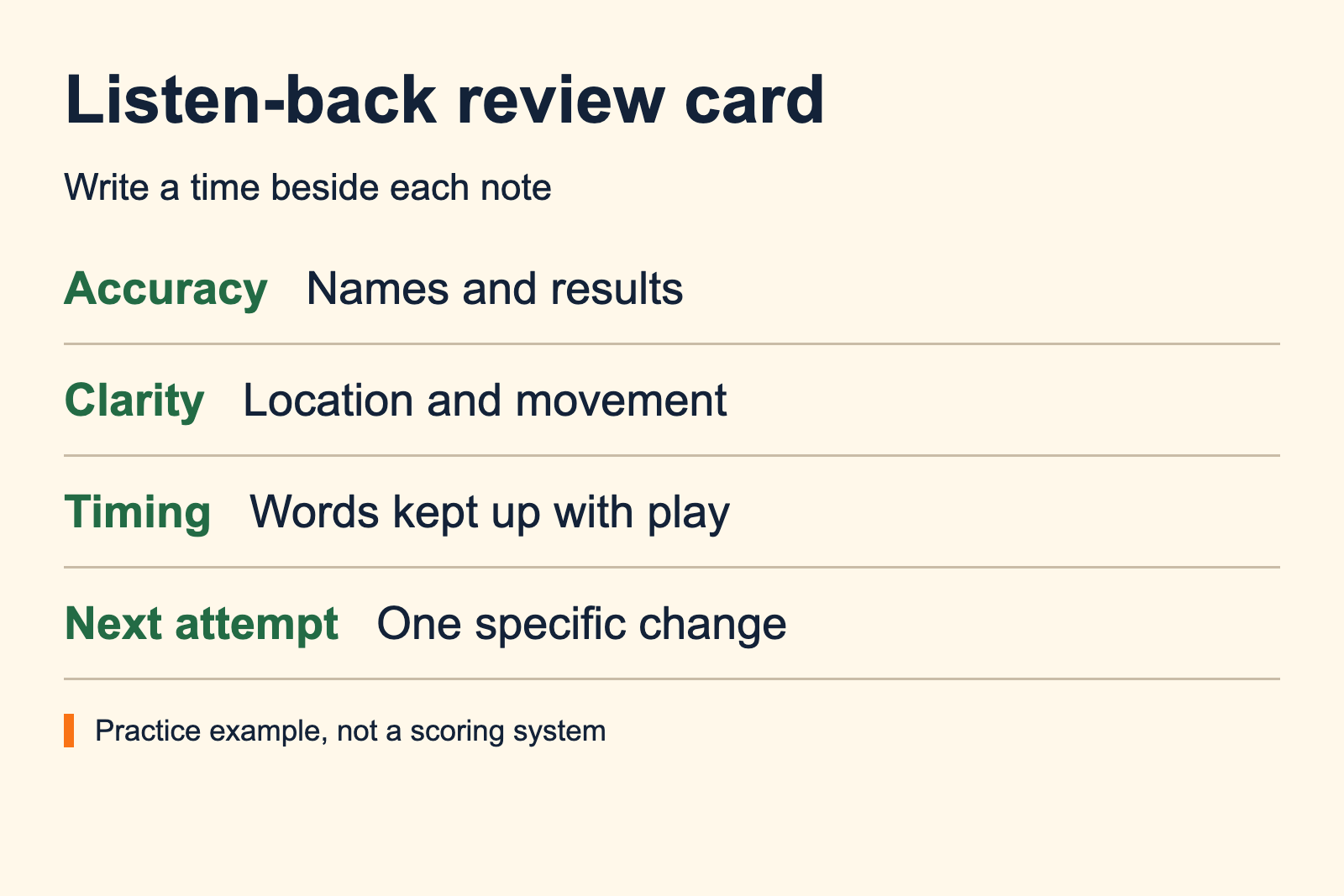
Use the review card to make short observations rather than give yourself a vague overall grade. “I said the player’s name after the next pass” tells you what to practice. “Sound more professional” does not tell you what to do on the next recording.
Ask a classmate to listen if one is available. Give them a specific job: mark any moment they could not follow. SUU’s course includes critique of both personal and classmates’ work; feedback is part of the practice, not a final verdict on whether you belong in broadcasting.
Keep the first recording and your notes. After the next attempt, compare the same moments. Check accuracy against the footage and source material, using the publication’s editorial standards as a reminder to separate confirmed details from assumptions.
Before another practice call, build a spotter board you can scan quickly. If you are calling baseball, practice with the scorekeeping exercise so your notes preserve the inning. Keep a recording that shows your improvement for a sports media demo reel.
Sources
- Emerson College: Tim Neverett’s broadcasting workshop, February 18, 2026
- Jon Chelesnik: short-notice play-by-play preparation, accessed September 6, 2026
- D.C. Public Schools, Prime Movers and RTNDF: The Play-by-Play Announcer’s Role and Voice, historical teaching material
- Southern Utah University: Broadcasting for Sports Media syllabus, spring 2026