
Start sports photography with an assignment you can finish: arrange access to a manageable event, make a useful set of photographs, write accurate captions and deliver the work for review. A complete assignment gives you something concrete to improve and, when you have permission to show it, something credible for a portfolio.
You can practice before anyone hires you. Be clear about whether you are making a personal exercise, contributing to student media or working for a client. Those arrangements bring different expectations. Describe your role honestly when requesting access and when presenting the finished pictures.
Define the first assignment
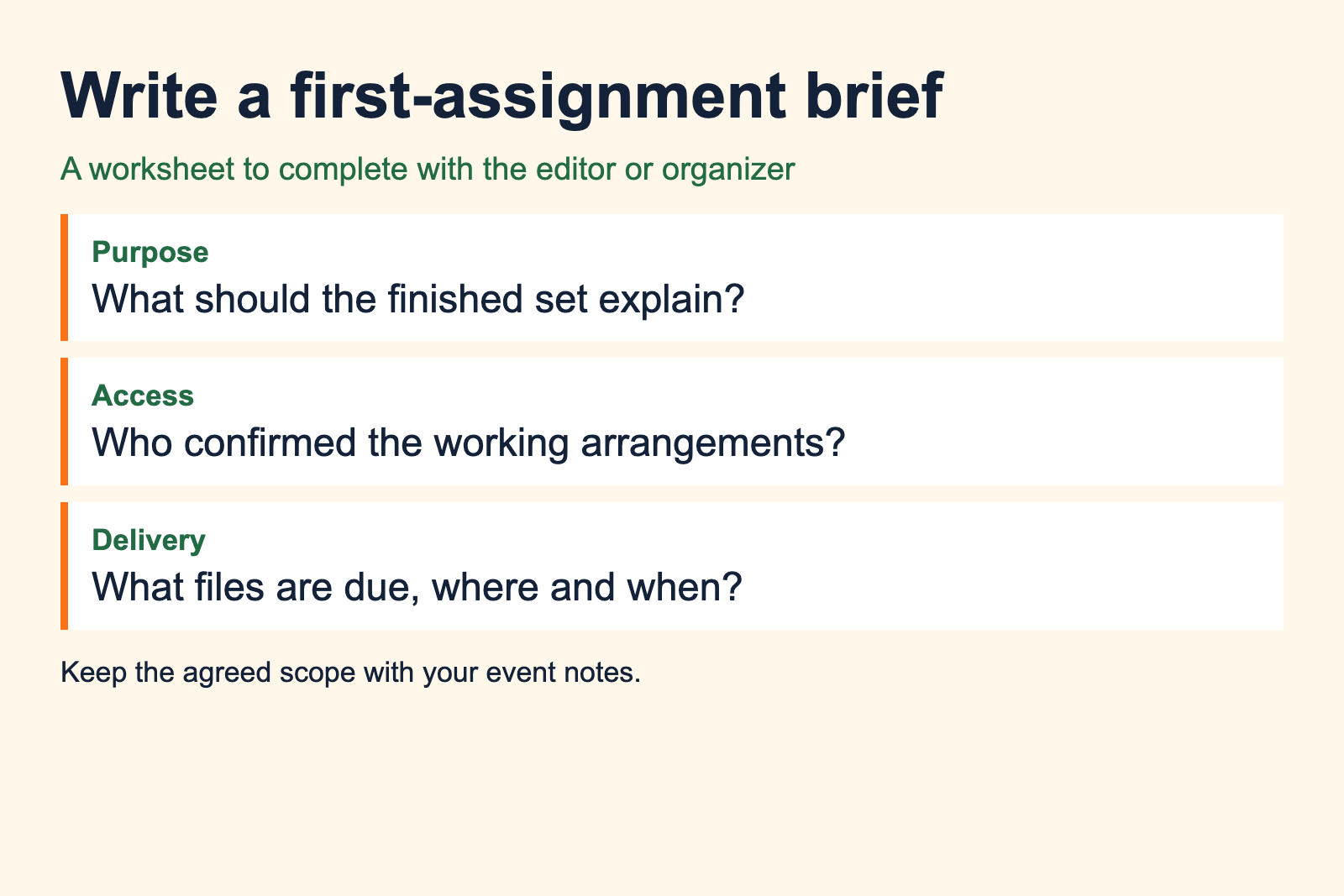
Choose a sport you can follow and an event you can reach reliably. Talk to a student publication, local editor or event organizer about a specific purpose for the pictures. “A small set showing the match and its aftermath for the campus report” is easier to discuss than an offer to photograph everything.
Agree on the event, intended use, delivery deadline and person who will review the work. Ask what is missing from the planned coverage. If another photographer is already assigned, find out how your contribution could help before duplicating that person’s task.
Keep the first scope small enough to complete. Your learning comes from the whole process, including the edit and delivery. An unfinished folder of hundreds of frames cannot tell an editor whether you can provide a clear, accurate package.
Arrange access before arriving
Contact the person responsible for media or event arrangements. Explain who you are, the publication or project, and what you want to photograph. Ask where you may work, when to arrive and whether there are equipment or photography restrictions.
Do not assume that admission includes access to a field, bench or restricted working area. Keep the instructions with your assignment notes. If an arrangement changes on arrival, clarify it with the responsible staff member before setting up.
For a personal practice session, follow the venue’s rules for ordinary attendees. For an assigned session, coordinate with the editor as well. A refusal at one event means choosing another workable assignment, not inventing a media role or arguing your way into a position.
Prepare the equipment you can use
Begin with the actual conditions. In Canon’s guide to sports photography equipment, Jeff Cable asks about the sport, indoor or outdoor setting, time of day and distance from the action. Those questions are more useful for preparation than a shopping list copied from a different assignment.
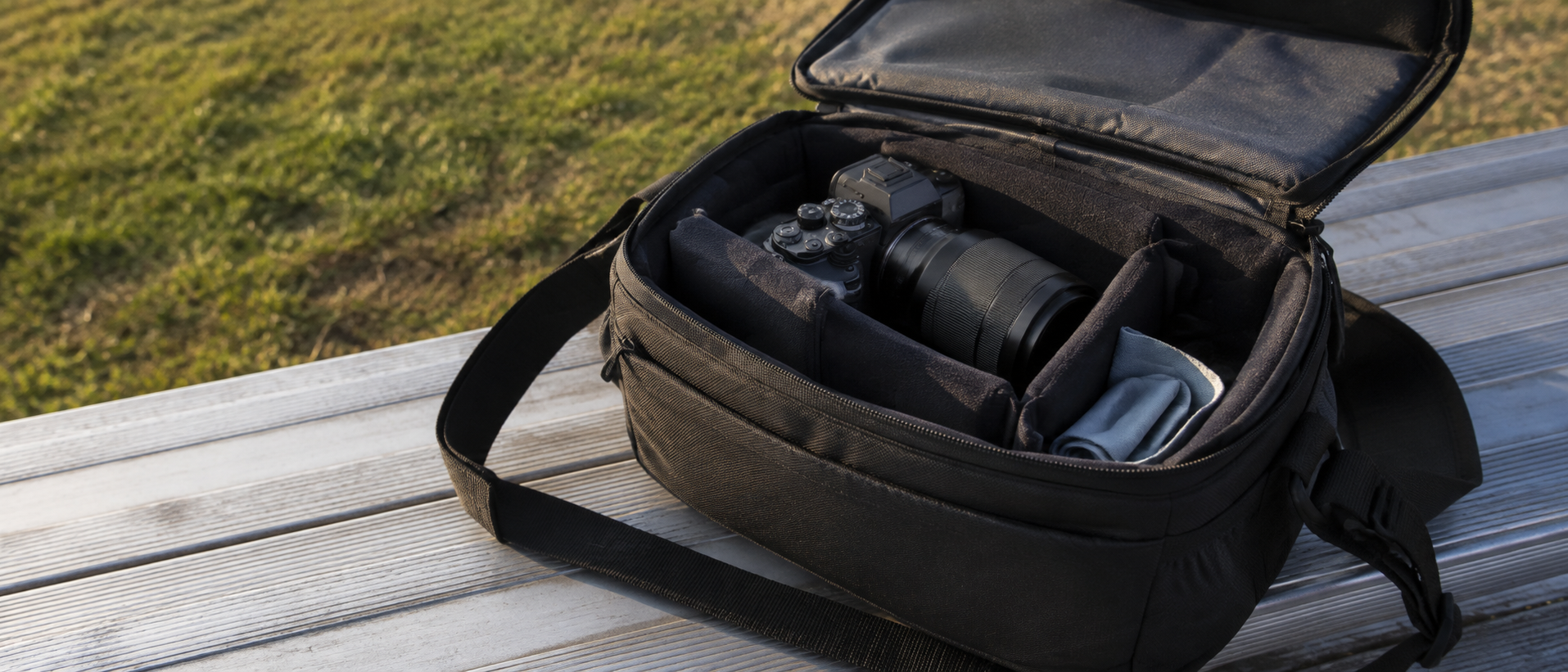
Check that your camera records, the battery is charged and you can transfer the files. Practice with the lens you will bring. If you borrow equipment, leave time to learn its controls before the event and confirm the return arrangement.
Use the camera-settings practice guide to test shutter speed, focus and exposure. Keep a record of the settings that produced usable frames in similar light. A purchase is easier to assess once you can name the limitation you are trying to solve.
Look for a story within the coverage
Photographer Rod Mar emphasizes storytelling in his Nikon profile. Apply that idea by deciding what a reader should understand from your finished set. An action frame can be part of the answer, but it does not automatically explain the setting or the importance of the moment.
Before play, note an event question you can observe. Perhaps a team is adapting to a changed lineup, or a competition is reaching its final stage. Verify that background with a dependable source rather than building the premise from a rumor.
During coverage, watch what happens around the main action as well as within it. Keep the assignment in mind when selecting frames. Avoid filling the final package with near-duplicates simply because you captured a long sequence.
Record information for accurate captions
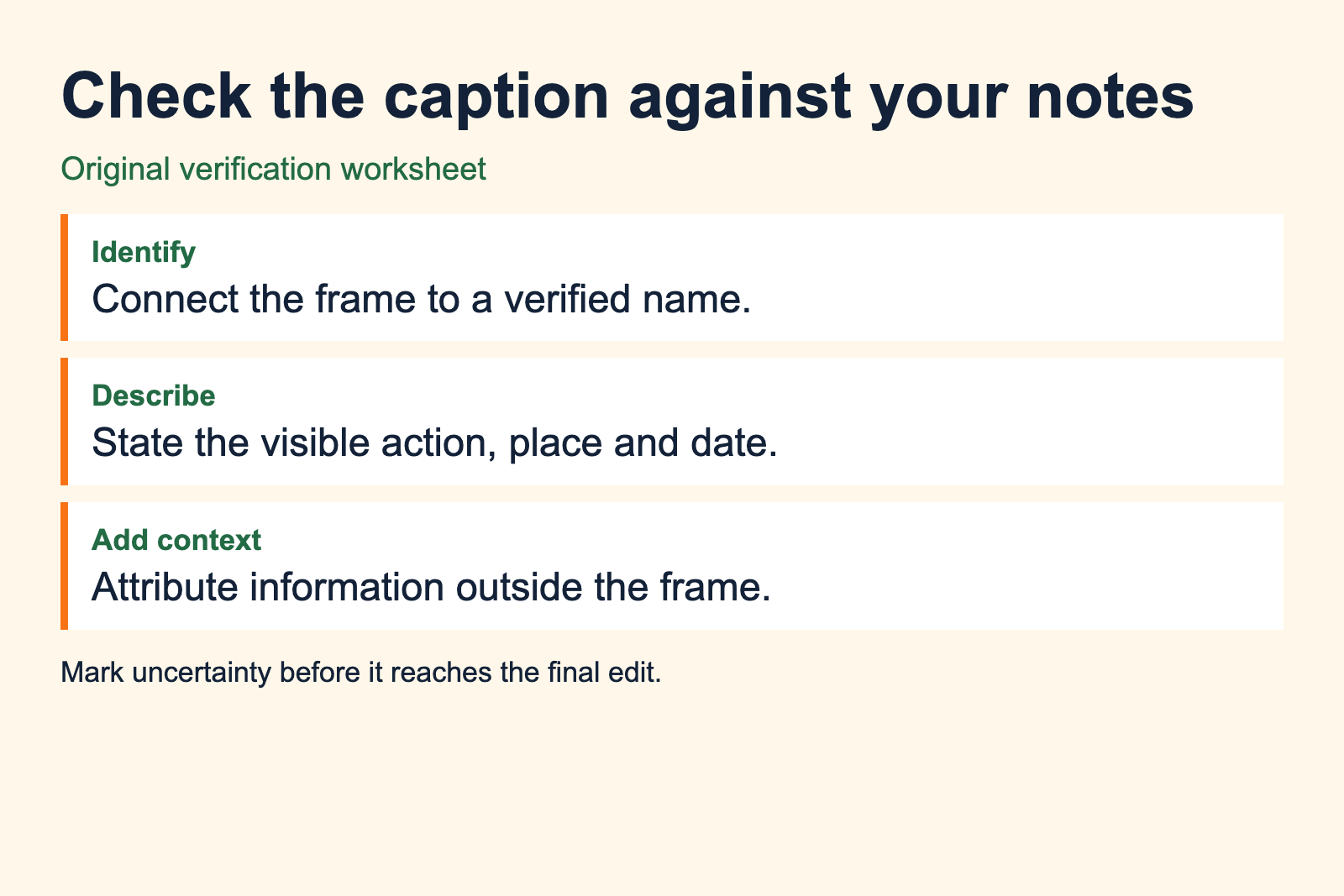
The NPPA’s caption guidance calls for accurate identification, action, location and date. Its ethical standards also emphasize context and preserving the integrity of the image. Build those habits into the assignment rather than trying to reconstruct everything afterward.
Connect notes to filenames or another identifier you can follow during editing. Confirm names and spellings. Separate what is visible in the photograph from background information that needs attribution. If you cannot verify an identity, return to a dependable source or ask your editor how to handle the uncertainty.
Never ask someone to repeat a game moment and present the result as spontaneous coverage. Keep original files. Follow the publication’s editing policy, and avoid alterations that mislead a reader about what occurred. A clearly labeled portrait and documentary action coverage are different kinds of work.
Edit and deliver a usable set
Start the edit by removing frames that cannot serve the assignment. Then compare the remaining choices for distinct information. Ask what each image contributes, whether its caption is verified and whether a stronger frame already does the same job.
Follow the recipient’s requested file format, dimensions, naming and delivery method. Open the exported files before sending them. Check that the filenames still match your notes and that the captions travel with the images in the agreed form.
Make the delivery message easy to act on. Identify the assignment and the folder or link, explain any unresolved issue and confirm what you have supplied. Keep a copy of the delivered set so you can discuss the same version during feedback.
Build a portfolio around finished work
Show the work you have permission to present. Add a short description of the assignment, date and your contribution. If a project was a personal exercise, label it that way. Do not imply a publication hired you merely because the photographs concern its local team.
The Associated Press career page specifically requests an online portfolio from photo and video internship applicants. That is one employer example, not a universal portfolio size. As of September 2026, the page says AP expects to announce its 2027 internship plans early next year.
Ask a reviewer a focused question: which picture weakens the set, which caption is unclear, or what coverage is missing? Use the answer to plan another assignment. The sports journalism entry guide explains how finished samples and editorial feedback fit into that broader process.
Build a sports media portfolio from the work that matches your next assignment. Keep accurate captions, your role and sharing permissions with each selection.
Sources
- Jeff Cable, Canon equipment guide, July 17, 2018. Assignment considerations only.
- Nikon, Rod Mar profile, accessed September 2026.
- NPPA, 2026 Best of Photojournalism guidelines, ethics and caption sections. Contest-specific file requirements are not generalized.
- Associated Press, Careers, accessed September 2026.