
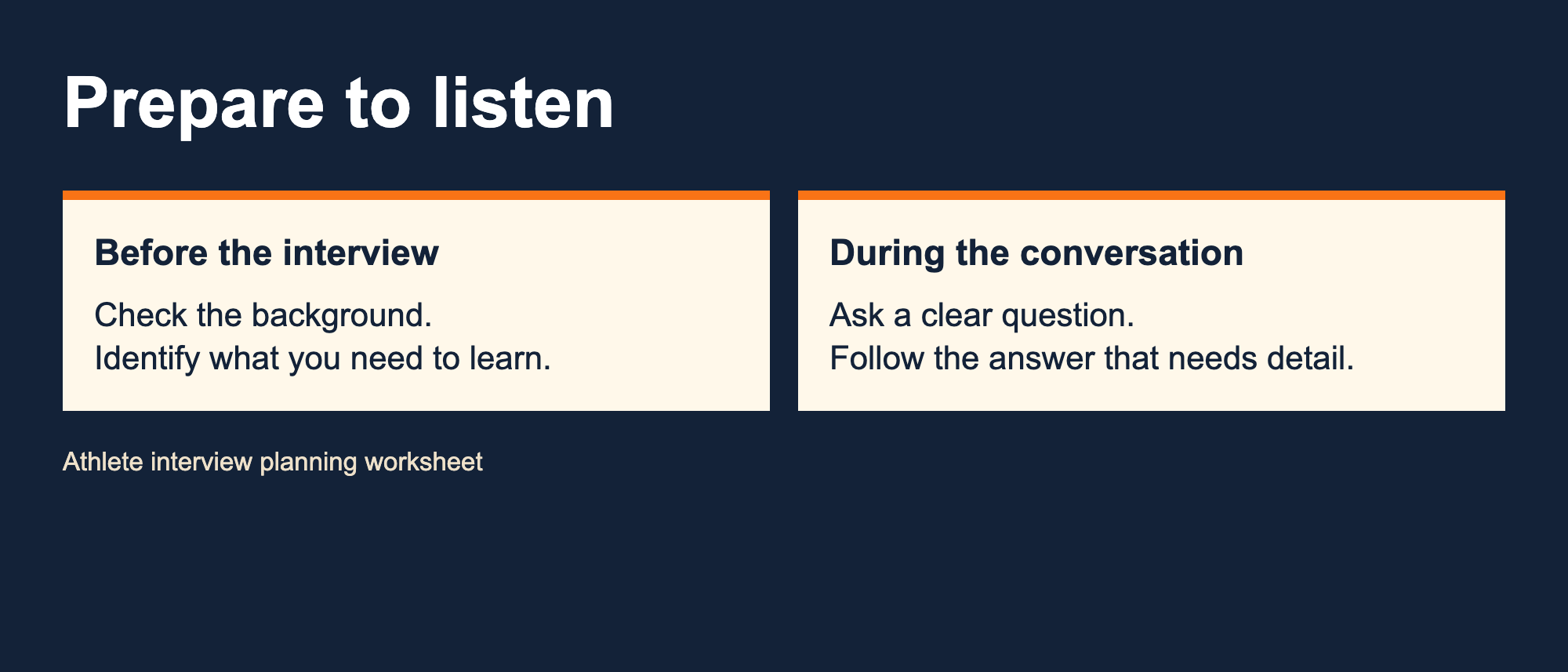
Prepare an athlete interview around something you need to understand. Check the background, ask a clear question and listen for the detail that needs a follow-up. A useful interview gives you information you could not get simply by reading the result.
For a first attempt, keep the subject manageable. You could ask about a specific passage of play, a change in preparation or the experience of learning a role. Decide what belongs in the story before filling a page with questions about every part of the athlete’s life.
Make the purpose and arrangements clear
Introduce yourself as a reporter and name the publication or class project. Explain the general subject, intended format and time you are requesting. Do not assume an athlete understands that a casual conversation will become published material.
Sports-writing instructor Joe Gisondi recommends introducing yourself to the sports information contact and making your reporter role clear. Use the team’s or organizer’s stated media process to arrange access. An interview request does not authorize entry into a restricted space.
For youth coverage, follow your publication’s and the organizer’s safeguarding procedures. Keep questions relevant to the assignment and resolve arrangements with your editor before the interview. A sports story does not require collecting private details that have no reporting purpose.
Check the background before choosing questions
Read the current roster, recent relevant reporting and the official result when there is one. Note what you already know, where it came from and what remains unclear. This avoids spending a short interview asking for facts that are readily available elsewhere.
Keep a distinction between observation and explanation. You might have seen a player move to a different position. That supports asking about the change. It does not establish that the player was unhappy, injured or being punished.
Write a compact question plan with room for notes beneath each subject. Put the most important unresolved point near the beginning in case the interview ends early. The plan should help you remember the purpose while leaving you free to respond to an unexpected answer.
Check the recording and keep notes
Explain the recording setup and confirm the applicable arrangements before starting. Reuters’ standards emphasize clear ground rules with sources. If there is confusion about how an answer can be used, pause and resolve it with the source and your editor rather than relying on different assumptions.
Make a short audio test in the actual setting. Listen to playback, check that the intended voice is audible and confirm that the file saved. The BBC Academy interview guide includes checking sound and the recording. A moving meter is useful, but playback tells you what was captured.
Continue taking brief notes even when recording. Mark a useful passage and any fact you need to check afterward. Keep the notes short enough that you can still listen. If the recording fails, do not later reconstruct exact quotations from a vague memory.
Ask one clear question at a time
BBC Academy distinguishes questions that invite explanation from questions that confirm a specific point. Both have a place. Ask for the athlete’s account when you need to understand a decision, then use a short factual check when you need to resolve a detail.
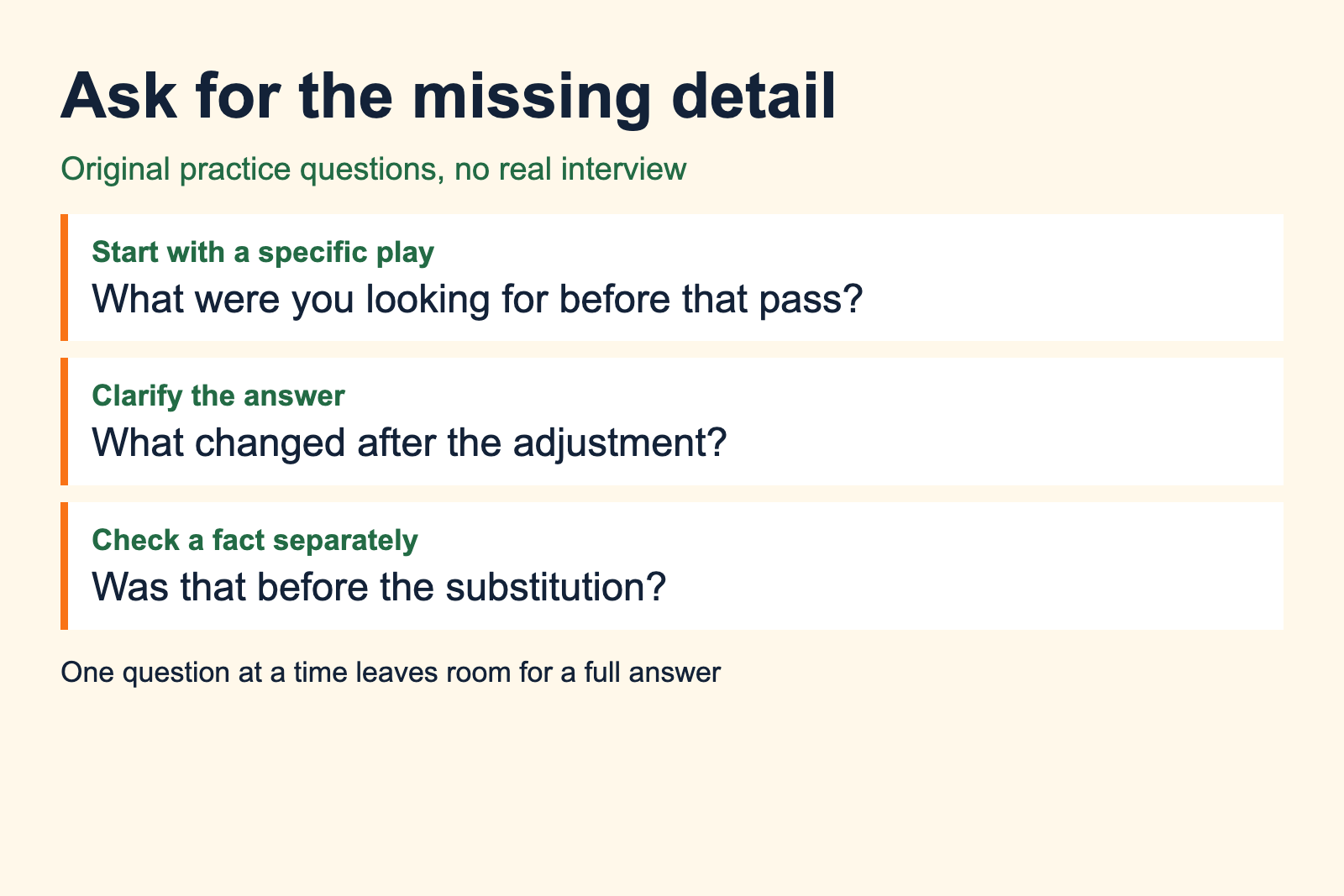
For example, instead of asking, “Were you nervous, what did the coach say and how did you win?” choose the point you need first: “What were you looking for before that pass?” That wording is an original practice question. It is not a quotation from an actual interview.
Keep your own interpretation out of the question unless you need the athlete to respond to it explicitly. “Why did you panic?” assumes a state of mind. “What did you see as the defender approached?” asks for an account the athlete can explain or correct.
Let the answer shape the follow-up
Listen for a phrase that remains vague. If the athlete describes an adjustment, ask what changed. If they refer to a difficult moment, ask which moment they mean. These follow-ups connect to the answer instead of abruptly moving to an unrelated item on your list.
A brief pause can give the person room to finish. Avoid talking over an answer merely to show agreement, especially when you need clean audio. When you do not understand a technical term, ask for an explanation that a reader unfamiliar with the team can follow.
Do not force every answer into the story you expected. An athlete can contradict your initial impression. Check the new information and reconsider the angle if the evidence warrants it. The point is to learn what happened, not to collect a sentence that validates the draft already in your head.
Handle difficult moments without personal attacks
A question about a relevant mistake can be direct and respectful. Identify the play accurately and ask what happened from the athlete’s position. Avoid turning one action into a judgment about effort, intelligence or character.
If someone declines to answer, do not invent the reason. Note the response accurately and discuss the next reporting step with your editor. A refusal alone does not prove the theory behind your question. For criticism involving another person, plan how that person will have an opportunity to respond.
Review the material before writing
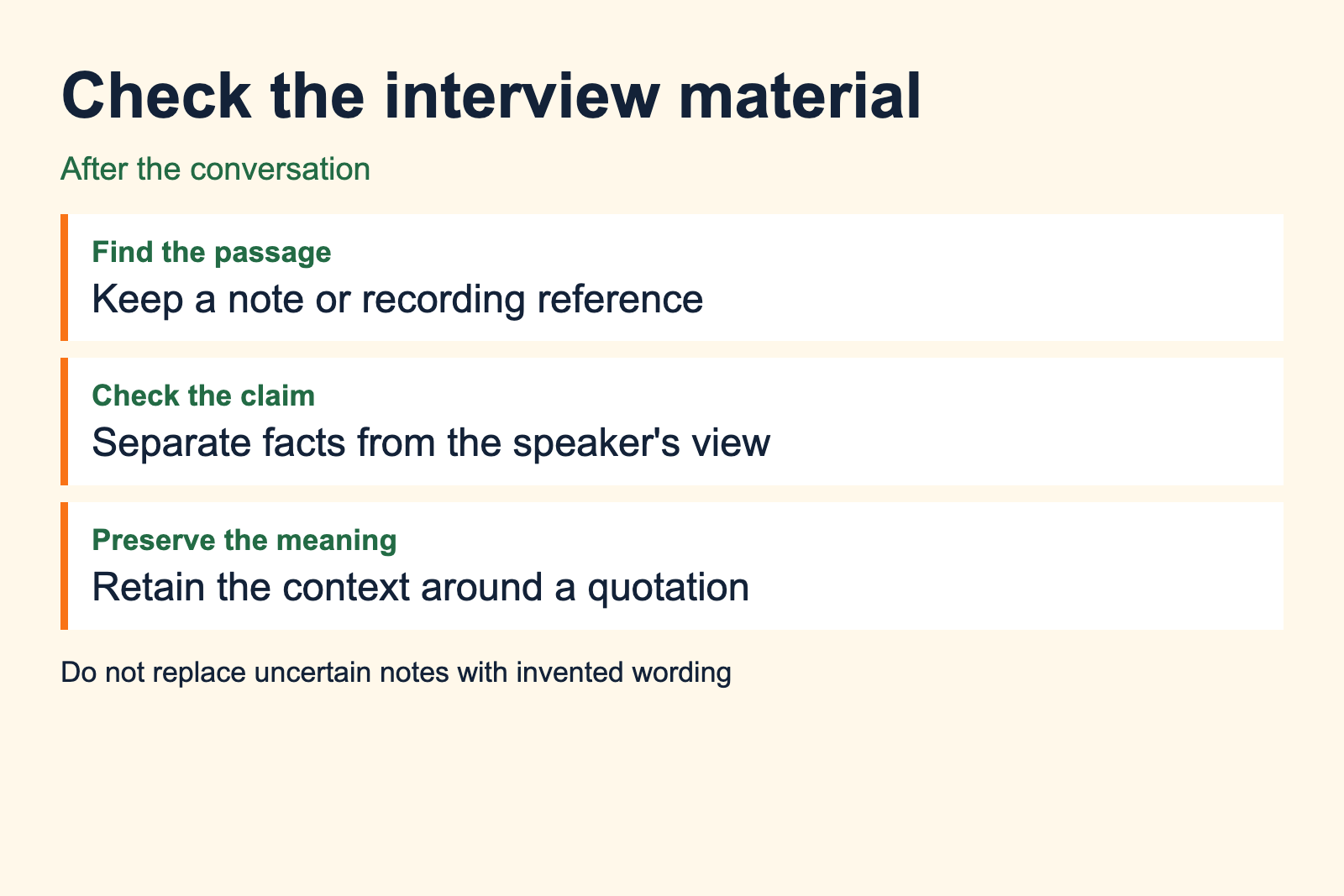
After the interview, confirm the spelling of names and review the recording while the conversation is fresh. Keep a way to find the relevant passage again. Check factual claims separately from the speaker’s opinion, and retain enough surrounding material to understand what the answer referred to.
When selecting a quote, preserve its meaning and context. Do not rewrite an awkward answer into a polished sentence and present the new wording as the athlete’s own. Use an accurate attributed paraphrase when appropriate, and ask your editor about uncertain wording.
The sports article writing guide explains where interview material fits into a report. The broader sports journalism guide covers the evidence and independence behind that work. Before filing, make sure every quotation can be traced to the material you actually gathered.
Keep source permissions and your interview notes with the finished piece. When including it in a portfolio, explain what you asked, reported and edited.
Sources
- BBC Academy, Interviewing: Asking the Right Questions, undated training PDF, accessed September 2026.
- Joe Gisondi, Sports Media Field Guide, April 2016. Practical introduction and role-clarity advice.
- Reuters, Standards and Values, accessed September 2026. Ground rules and quotation context.