
Sports media careers include reporting, announcing, production and technical work. Pay depends on the particular job, employer, location and working arrangement. A single average for “sports media” is a poor guide to what a first offer will pay.
Use the national benchmarks below to understand the scale of related occupations, then investigate the actual roles you could apply for. The figures are U.S. Bureau of Labor Statistics medians for May 2025, checked in September 2026. They cover broader occupations, not sports workers alone.
Choose the work you want to do
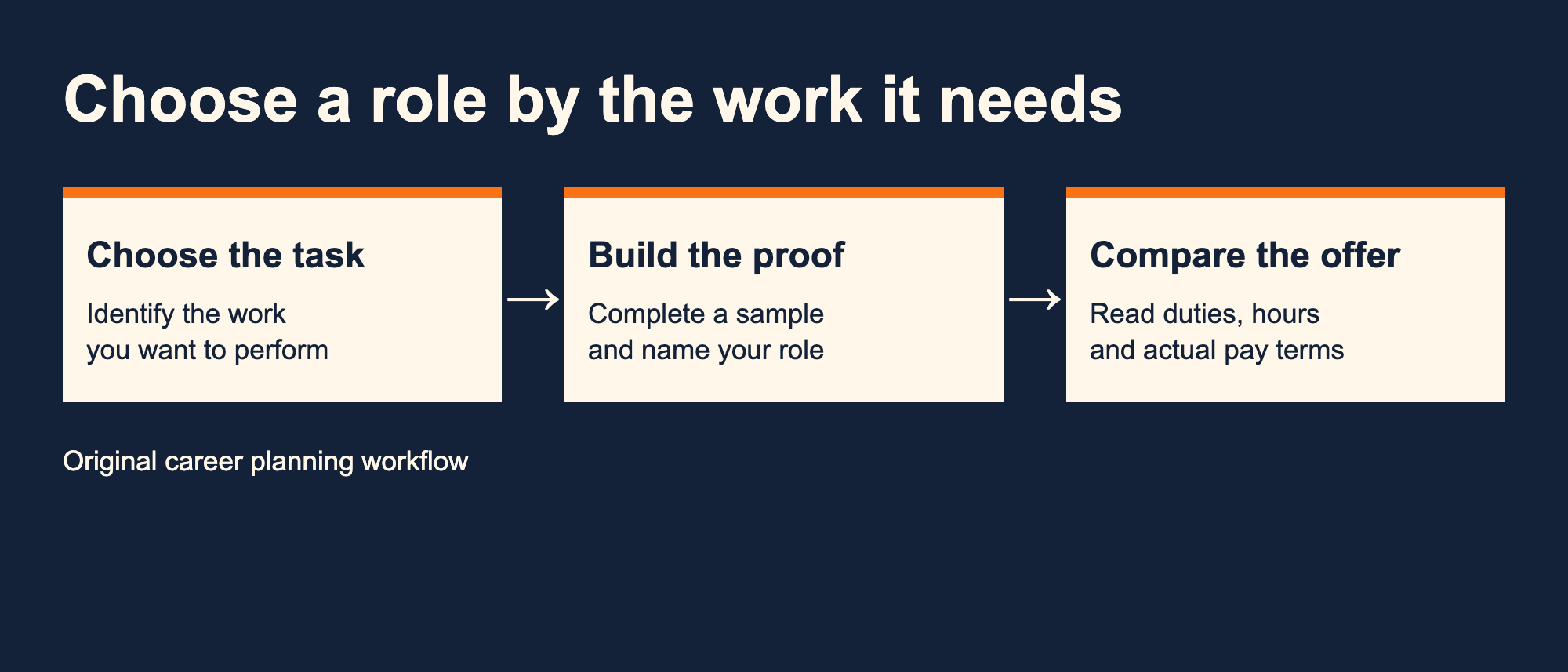
Start by naming the task you would like to become reliable at. Reporting means finding and checking information, interviewing people and producing clear stories. Announcing means preparing for an event and explaining it as it happens. Production involves organizing the material and people needed to make a program.
Technical work includes setting up and operating the systems that carry picture and sound. The BLS technician profile includes equipment operation, recording and troubleshooting. Someone who enjoys solving an audio problem has a different starting point from someone who mainly wants to conduct interviews.
The Associated Press careers page describes news work across sports, photos, video, social media and graphics. Treat that as a reminder to look beyond the most visible on-air job. Read the duties in individual openings to see which skills the employer actually needs.
Read the pay figures with their labels
For broadcast announcers and radio DJs, BLS reports a median of $22.76 per hour in May 2025. That is an hourly occupational benchmark, not a yearly sports-commentator salary. The hours and number of assignments in a particular job still matter.
The annual medians below use the same wage reference month. Each row names the broad BLS group being measured. These are not a ranking of entry-level sports jobs.
| BLS occupation | May 2025 annual median |
|---|---|
| News analysts, reporters and journalists | $62,200 |
| Broadcast, sound and video technicians | $60,150 |
| Producers and directors | $90,360 |
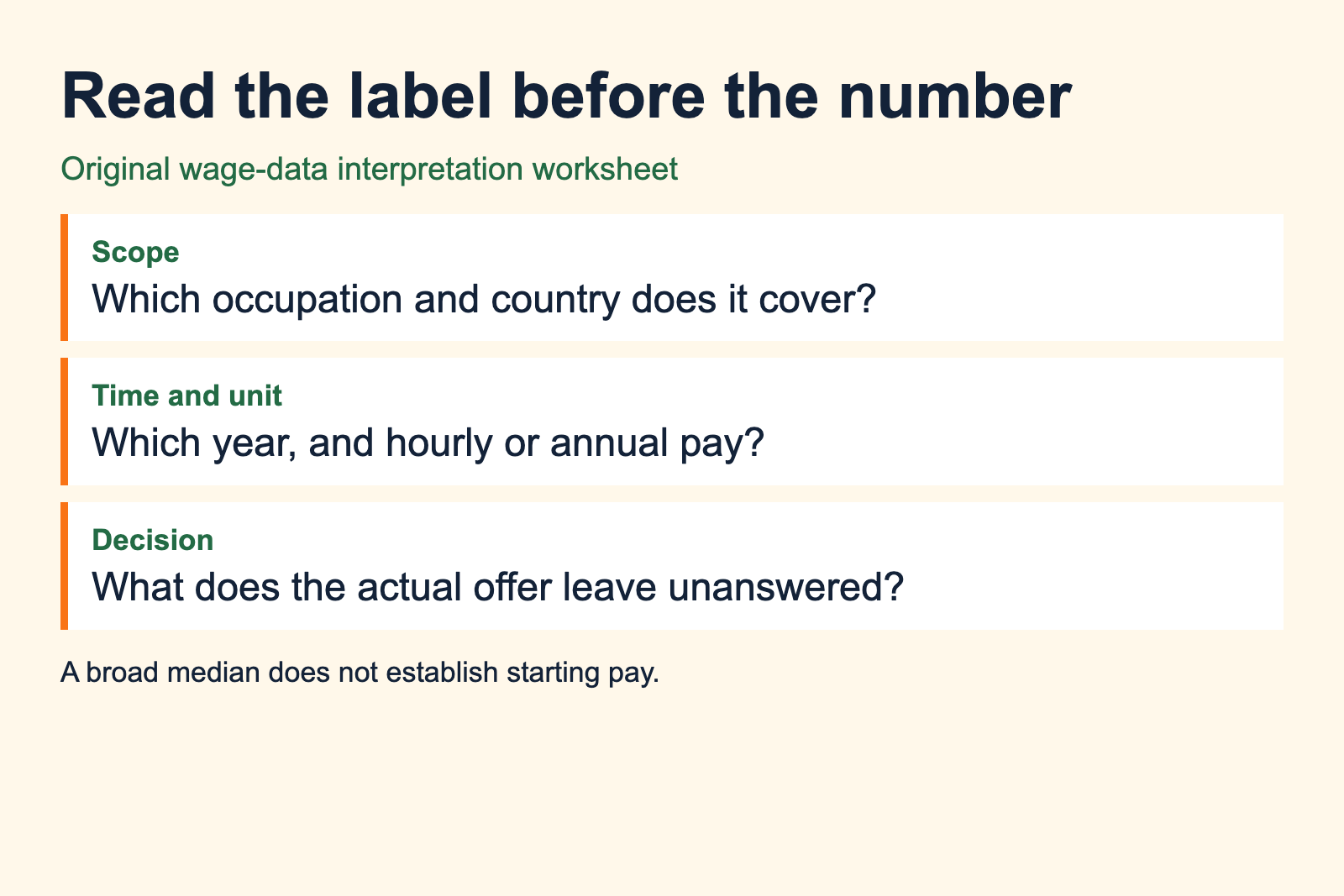
A median places half the measured workers above the figure and half below it. It does not tell you what a beginner in your city will receive. The producer/director category, for example, covers work beyond sports and includes roles that require prior production experience.
Separate a benchmark from a starting offer
The BLS pay FAQ says it does not collect starting-salary data. It also explains that these wage estimates exclude self-employed people and do not include employer costs for benefits. Those limits matter when comparing a staff role with freelance assignments.
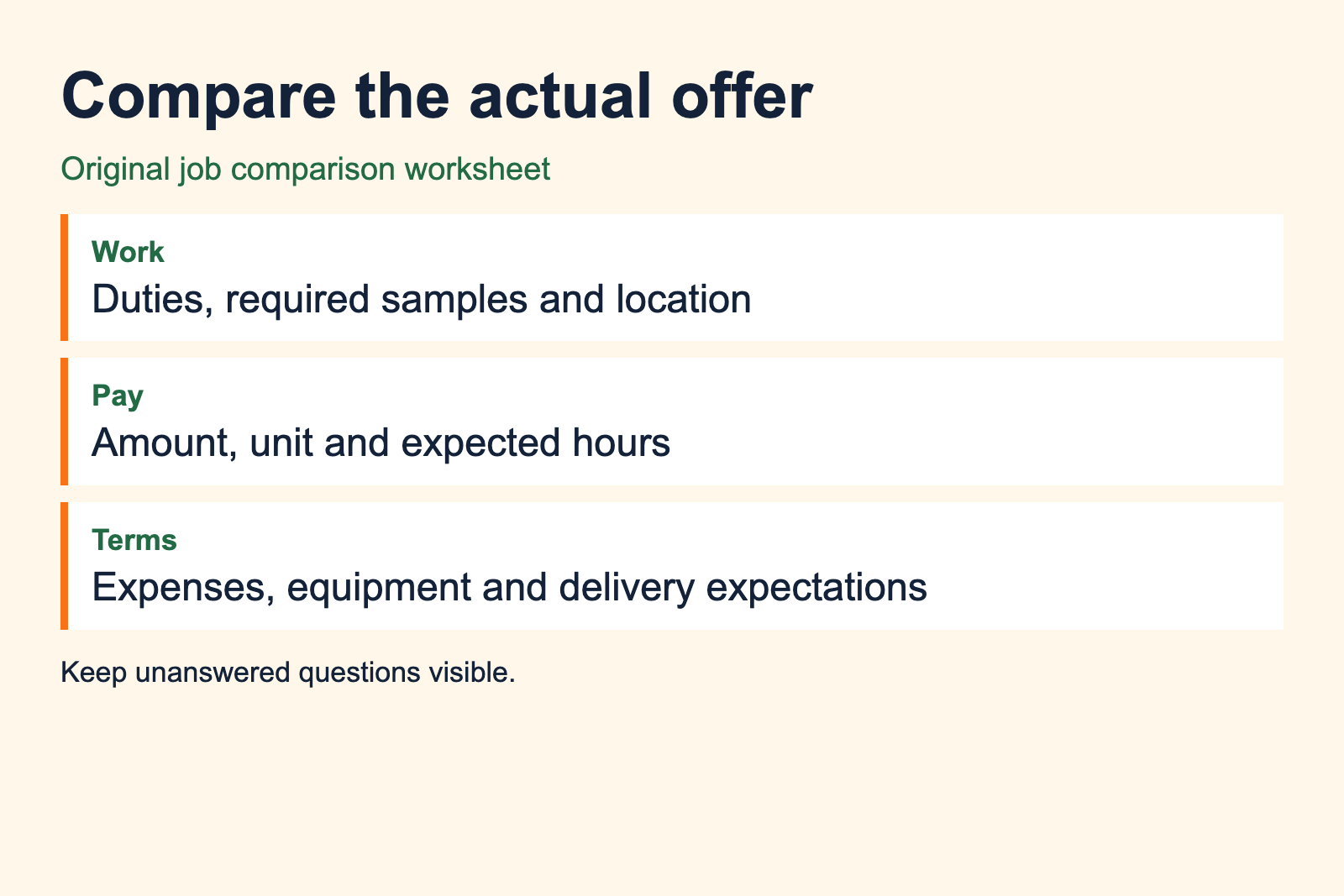
For an actual opening, record the stated pay range, whether it is hourly or annual, the expected hours and the duties attached to it. Check the location and whether travel, equipment or other work expenses are covered. Leave a blank when the posting does not answer a question.
A freelance fee is not directly comparable with an annual salary. For your own planning, list the preparation, travel, event and delivery time involved, along with the expenses you expect to pay. Ask for the assignment terms instead of assuming the quoted amount covers a standard workday.
Compare responsibilities before job titles
Two jobs called producer can involve different work. One might emphasize editing short videos; another might require coordinating a live program. Read the verbs in the description and identify what you would need to deliver during an ordinary week.
Make a simple comparison sheet for openings that interest you. Include required skills, location, schedule, sample requirements and pay terms. Mark which requirements you can already support with evidence and which need further practice.
Do not treat every requirement as interchangeable. A strong written feature does not prove that you can operate a live audio setup. A polished montage does not show how you handle a sustained commentary sequence. Choose the sample that answers the employer’s specific question.
Build proof for one role first
For reporting, complete a sourced article and preserve the notes that support it. Use the sports journalism career guide to turn an accessible assignment into a sample you can discuss with an editor.
For announcing, record a practice sequence and review the accuracy, pacing and explanation. The broadcasting career guide gives you a way to build those skills through specific work.
For production or technical work, keep a record of the role you performed, the finished output and a problem you solved. Describe your contribution accurately when other people also worked on the project. Ask a supervisor or collaborator for feedback on the part you controlled.
Use current requirements when applying
STAA’s hiring-director advice shows that reviewers differ in what they want from a demo. Follow the current employer’s instructions for length, format and supporting material. Do not let a generic career article override the actual application.
Check that an opening is still accepting applications and that your links work for someone outside your account. Keep a copy of the posting and the version of the materials you sent. That makes it easier to prepare for a conversation about the work.
Choose the next step from your evidence gaps. If every suitable role asks for a skill you have not practiced, complete a small project that uses it. If you already have the relevant work, improve how clearly you present it and apply to a role whose duties fit.
Use an actual role description to choose evidence of your skills. The demo-reel and portfolio guide helps you match a sample to that role and explain your contribution.
Sources
- U.S. Bureau of Labor Statistics, Occupational Outlook Handbook: Announcers and DJs; News Analysts, Reporters and Journalists; Broadcast, Sound and Video Technicians; Producers and Directors. May 2025 wage data.
- BLS, Occupational Outlook Handbook FAQs, pay methodology.
- Associated Press, Careers; STAA, Top Tips on Applying for Big-Time Play-by-Play Jobs. Accessed September 2026.