
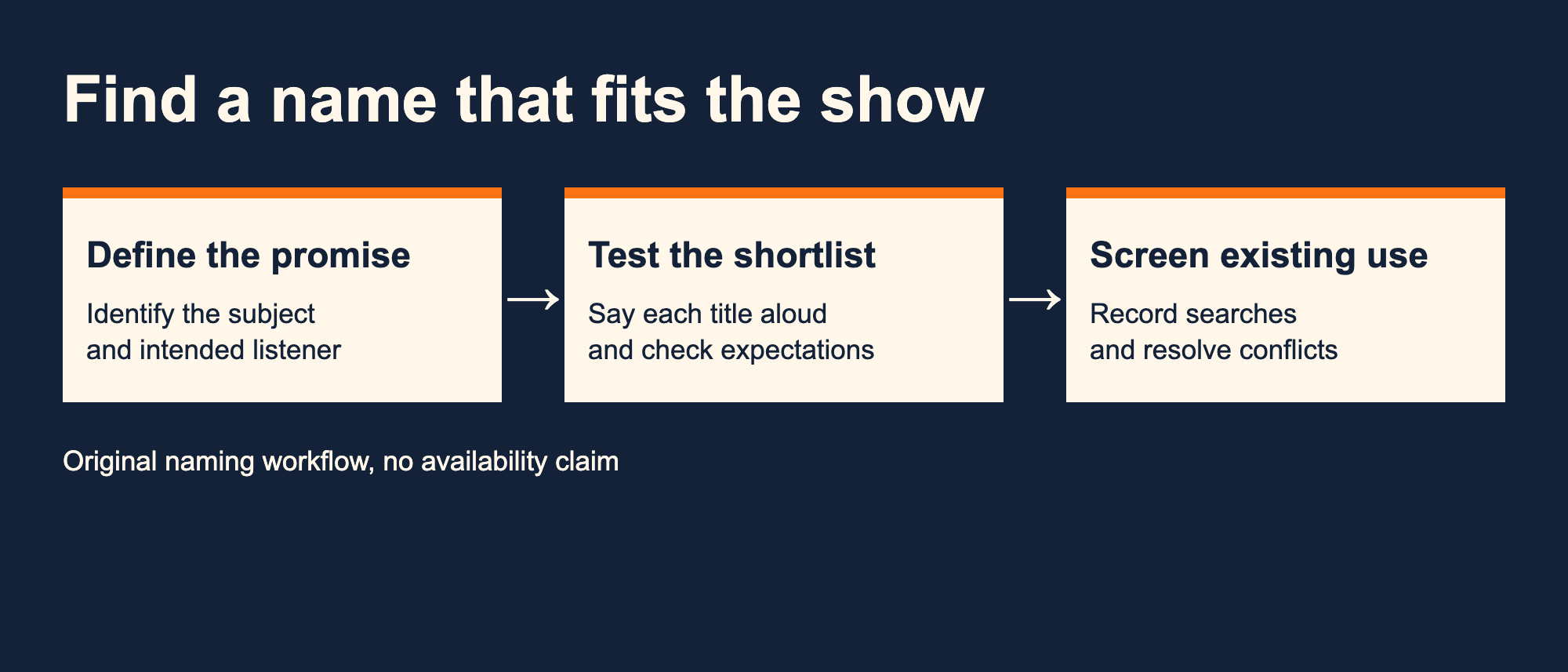
A useful sports podcast name gives a new listener a clue about the show and is easy to say, remember and search. Start with your audience and angle, then test a shortlist against the episodes you actually plan to make.
The ideas below are brainstorming examples, not names checked for availability. Some may already be in use. Adapt them to your subject, then investigate existing shows, businesses and similar names before committing to one.
Choose the promise before the title
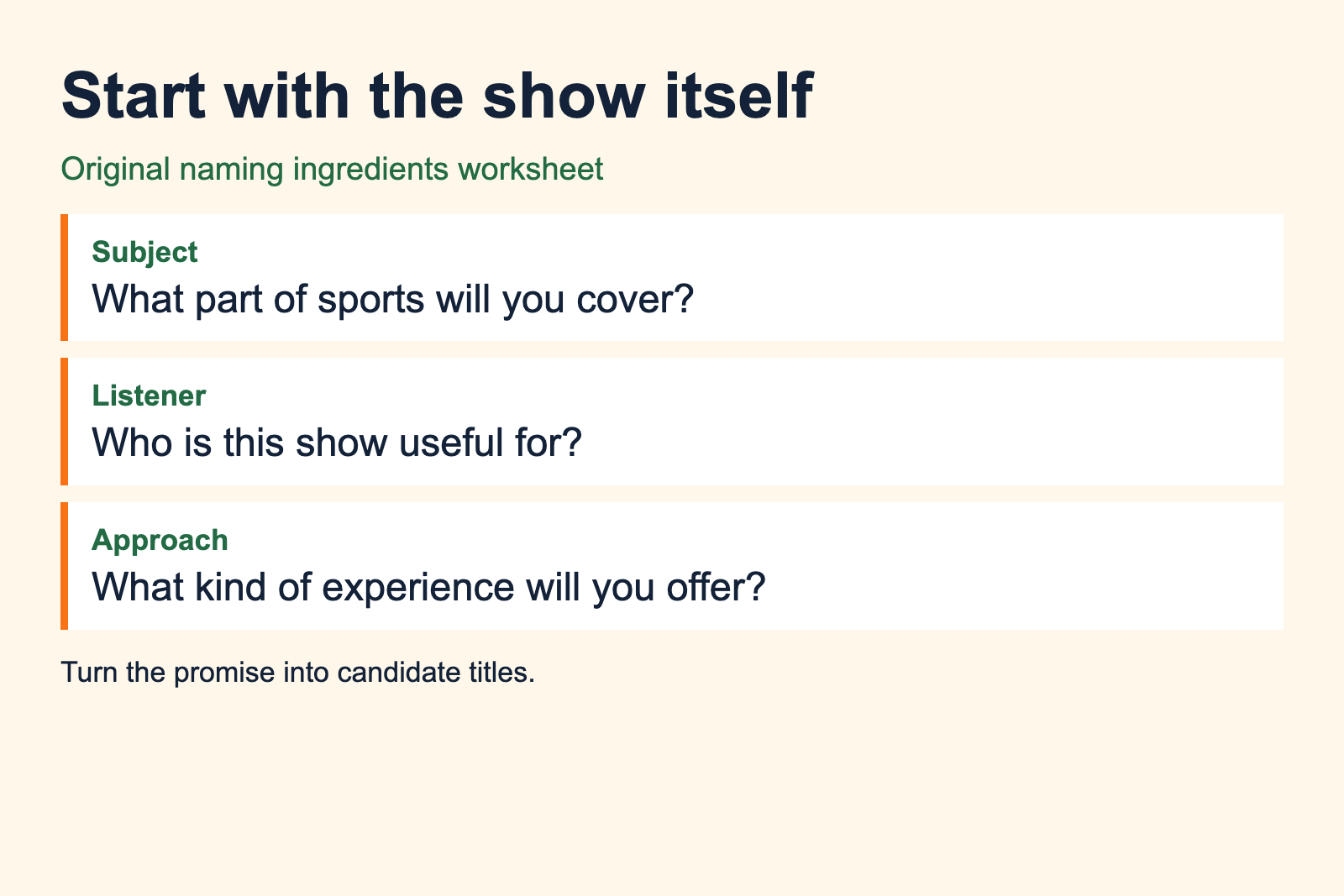
Write a plain sentence describing the show. A weekly explanation of local basketball needs a different title from a series about sports media jobs. A name built around shouting opinions will feel misplaced if the episodes are careful interviews.
In Spotify’s naming guide, Alex Bousquet emphasizes communicating what makes a show specific to its audience. Use that as a test: could a stranger make a reasonable guess about the experience your title promises?
Write down words from the sport, the place and your particular approach. Combine those ingredients without forcing every one into the final title. Keep a separate description for details that would make the name cumbersome.
Ideas for reporting and local coverage
These examples suit shows that explain events and bring listeners closer to a community. Replace generic place words with details that are accurate for your coverage, and keep the resulting title independent of official team branding.
- After the Final Whistle: a starting point for a postgame reporting show. The description should explain which sport and community you cover.
- The Local Sports Notebook: suggests reported observations and stories from a defined area. It works best when the location is clear elsewhere.
- Beyond the Match Report: points toward the decisions and people behind a result. Use it only if the episodes actually go further than a recap.
- Our Town, Game Night: suggests community coverage and a sense of place. Consider whether that tone fits your intended listener.
- The Weekend Scorebook: implies a recurring review. Avoid a schedule-based name if you are unsure you can maintain that rhythm.
Choose an angle that you can report consistently. A title promising behind-the-scenes access will disappoint if you only discuss publicly available scores. The sports journalism guide can help define the reporting work behind that promise.
Ideas for analysis and explanation
An analysis show needs a title that fits how it explains the game. These prompts can be narrowed to a particular sport or competition, subject to the same screening process as any other candidate.
- The Play Explained: suggests a focused breakdown rather than a whole week of unrelated headlines.
- Between the Possessions: evokes basketball discussion but needs a description that makes the scope clear.
- Reading the Game Together: suggests an accessible conversation for listeners learning how to watch.
- One Sequence Further: could fit a show that follows the consequences of a decision or passage of play.
- The Replay Question: suggests returning to a moment with something specific to investigate.
Read each candidate beside several planned episode titles. If the name only suits the first episode, decide whether the show itself is that narrow. A useful title should leave room for the work you intend to do next.
Ideas for interviews and sports media
For a show about the people making or covering sports, name the conversation you want to have. Avoid implying that every guest is a celebrity or that every interview reveals a secret.
- Before the Broadcast: suggests preparation, production and the work listeners rarely hear.
- The Working Sports Desk: could fit practical conversations with reporters, editors and producers.
- How the Coverage Gets Made: makes a direct promise about sports media production.
- Notes from the Press Seat: suggests reporting observations, provided that matches the host’s actual work.
- The Next Assignment: could fit a career-focused show about learning through real projects.
Say the title as part of an introduction. Then say it in a recommendation to a friend. If you need to explain a spelling joke every time, try a simpler version before designing the artwork.
Test a shortlist with actual listeners
Choose a few candidates and ask someone in the intended audience what they expect each show to contain. Do not explain the correct answer first. Record the words they use so you can compare their expectation with your plan.
Read a name aloud and ask the listener to type it. Make a simple title card and view it at a small size. These original exercises test spoken clarity and legibility; they do not predict audience growth.
Keep the strongest candidate because it fits the show, not because everyone in a large group likes it equally. A specific title will not appeal to every listener. The useful question is whether it reaches the people you want to serve.
Check existing use before committing
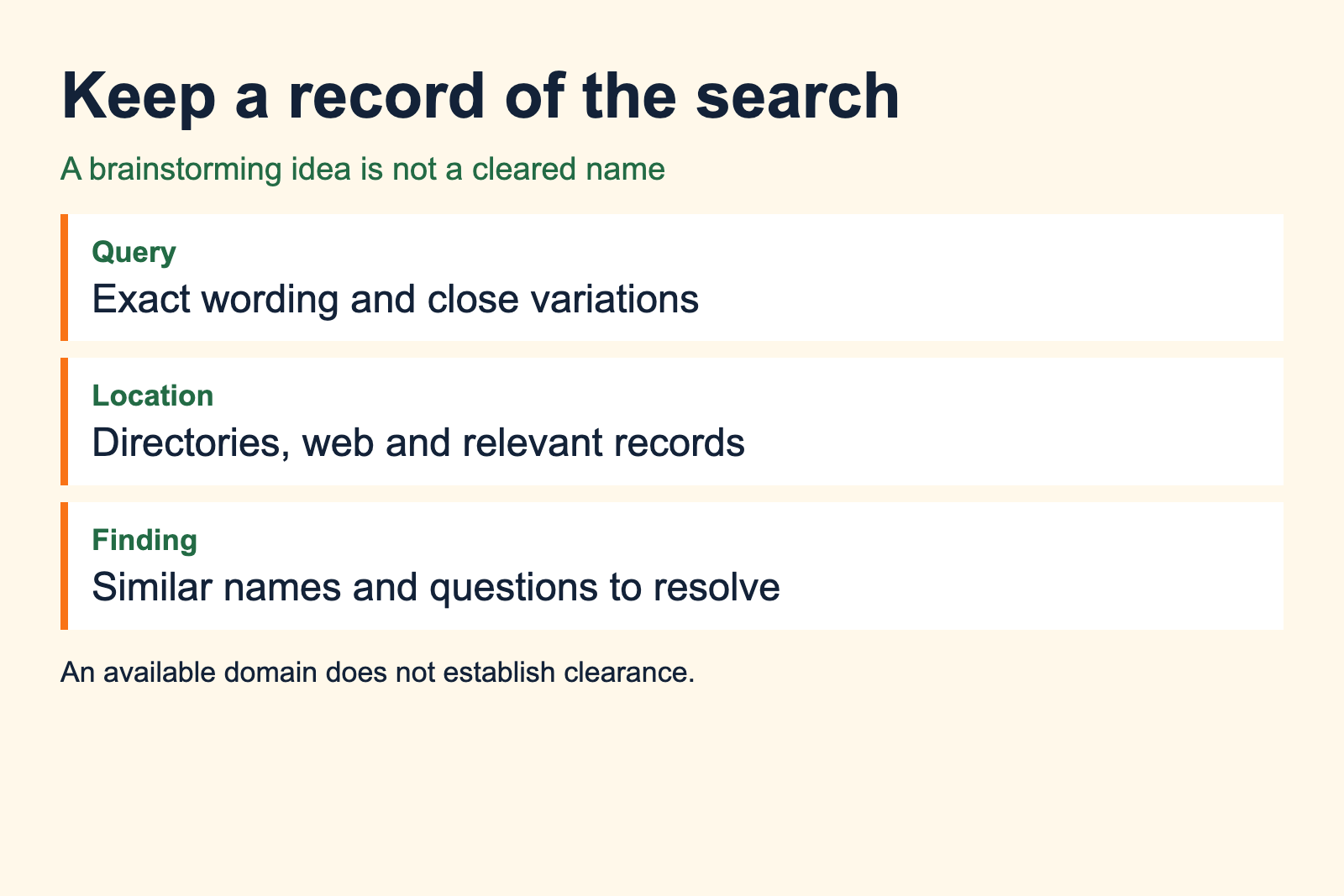
Search podcast directories and the wider web for exact wording and close variations. Check the associated domain and social handles if you intend to use them. Record what you searched and what you found, including active shows with similar titles.
The USPTO’s federal trademark searching guidance explains that a clearance search involves multiple sources and that similarity can involve sound, appearance or meaning. An empty exact-match search or an available domain does not establish that a name is cleared. Use the official guidance and qualified advice when assessing a potential conflict.
Put the chosen name into a real pilot
Once the name has survived your checks, use it in a pilot introduction and a clear show description. Follow the podcast launch workflow to test the complete listening experience.
For an RSS-based Apple listing, Apple’s metadata guide explains updating show details through your host or feed. Check the public listing after the update. The title in your working document is not proof that listeners see the same name.
Once the name is settled, judge the work by the finished audio. The demo-reel guide helps you select a passage and explain your hosting, reporting or editing role.
Sources
- Spotify for Creators, Podcast Name Ideas, with Alex Bousquet.
- USPTO, Federal Trademark Searching.
- Apple Podcasts for Creators, Update Your Podcast Metadata. Documentation checked September 2026.