
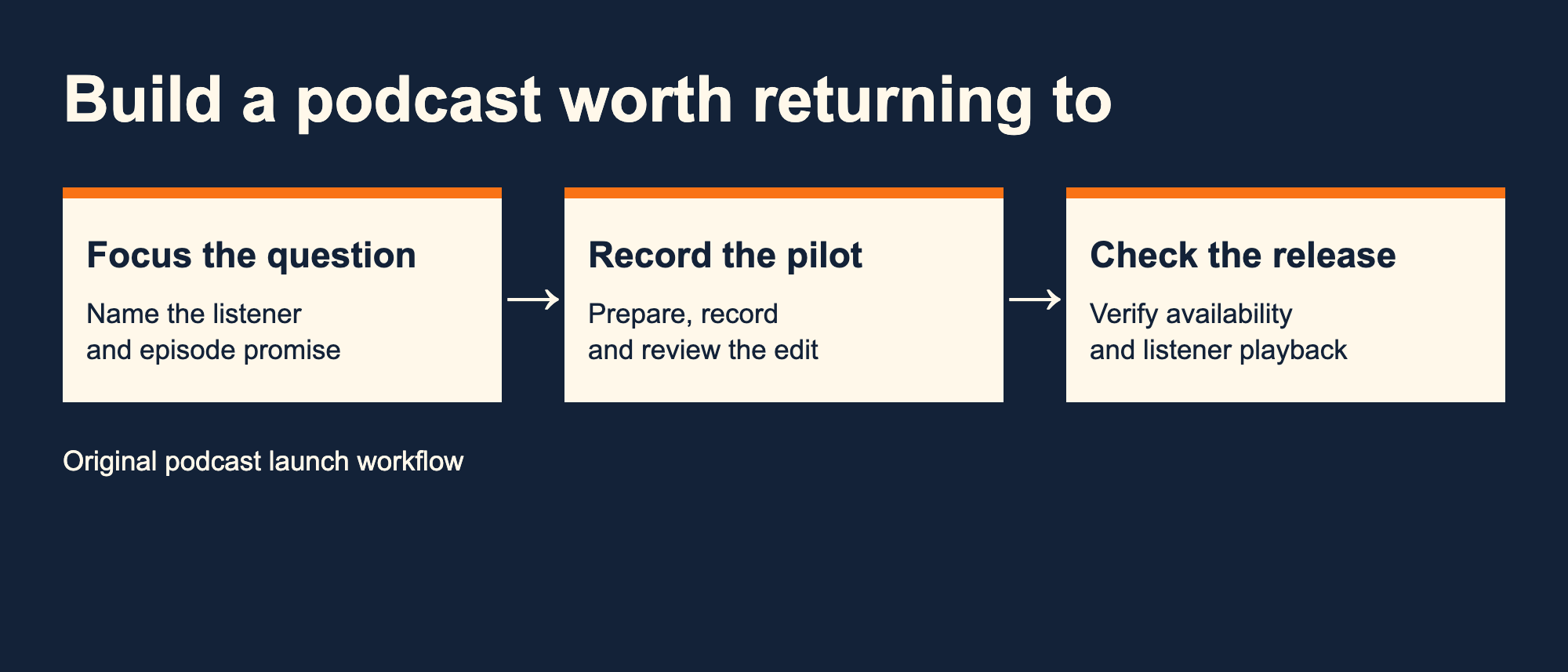
Start a sports podcast by choosing a specific listener, recording a useful pilot and building a release routine you can repeat. Your first job is to make one episode worth finishing. Equipment, cover art and distribution should serve that job.
A show about every major sport will be difficult to prepare alone. A focused show can make a clearer promise: explain one local team’s week, review a particular league’s tactics or interview people who do overlooked work in sports. Choose a subject you can keep reporting when the obvious opening topics run out.
Write a promise for the listener
Complete this sentence: this show helps a particular listener understand a particular part of sports. Name the listener closely enough that you could ask someone who fits the description to hear your pilot.
For an original planning example, imagine a show for parents who want to understand how a local youth league operates. An episode about how the schedule is assembled fits that promise. A long argument about an unrelated professional team’s transfer rumors probably does not.
Write several possible episode questions before committing to the show. Check whether you can reach the people or records needed to answer them. If every idea depends on access you do not have, narrow the premise to reporting you can actually complete.
Build a pilot around one question
NPR’s story-planning worksheet asks students to identify the story’s driving question and define what falls outside it. Use that discipline for your pilot, even if the format is a conversation.
Write a short rundown: the opening question, the evidence or discussion that answers it, and the point the listener should leave with. Assign a purpose to each segment. A segment that only repeats the introduction can be shortened or removed.
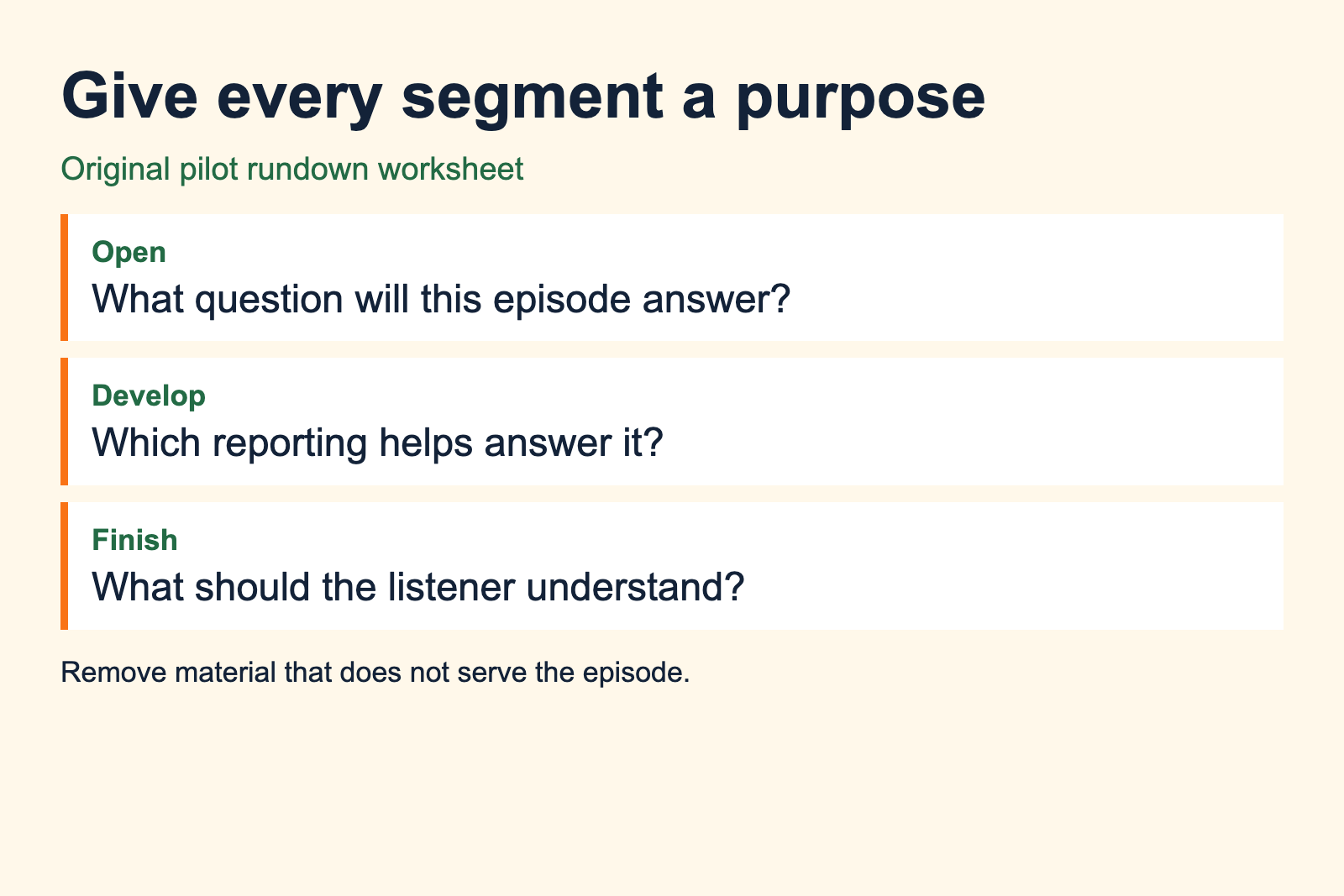
For the scheduling example, the opening could explain the problem listeners have noticed. The middle could contain an interview with the organizer and an explanation of the constraints. The ending could clarify where listeners can find the confirmed schedule. These are planning possibilities, not claims about a real league.
Let the material determine the pilot’s length. Finish when the episode has fulfilled its promise. After listening, note where attention drops rather than stretching the recording to match another show’s duration.
Record a test before the conversation
Spotify’s current recording guidance describes using a device recorder or separate recording software. Its former built-in recording and editing tools are no longer available. Save an edited file that your chosen host accepts.
Start with equipment you can test. Record a short passage at your normal speaking level, then play the saved file through headphones. Listen for room noise, harsh distortion and changes in volume when you turn away. Fix the most obvious problem and record another test.
For a guest, check both voices and confirm the recording arrangement before the interview starts. Make sure each person understands that the conversation is being recorded for the show. Keep a plan for what you will do if a connection drops or one voice is missing from the file.
Prepare the reporting, not only the questions
Keep a source note for names, results, dates and other facts you expect to mention. Separate a confirmed result from your interpretation of why it happened. If a point is uncertain, investigate it or describe the uncertainty clearly.
Use the athlete interview guide to prepare focused questions and useful follow-ups. Listen to the answer instead of rushing to the next item on the page. A specific explanation often gives you a stronger segment than a familiar opinion.
If your format includes a recap, apply the sports article reporting workflow to verify the central event and supporting details. Speaking casually does not remove the need to check what you say.
Edit for meaning and check the export
Keep an untouched copy of the recording. Build the episode in a separate project, removing false starts and passages that do not help answer the question. Preserve the speaker’s meaning when shortening an answer.
Listen across each edit. Check that a removed sentence has not changed the context of the next one. Re-record an unclear introduction if that is simpler than trying to repair it with effects.
Export the finished episode and listen to that file from beginning to end. Check the opening, ending and transitions, along with any names or credits. Use music or clips only when their terms cover your intended use; a familiar sports broadcast excerpt is not automatically available for your show.
Choose a host and verify distribution
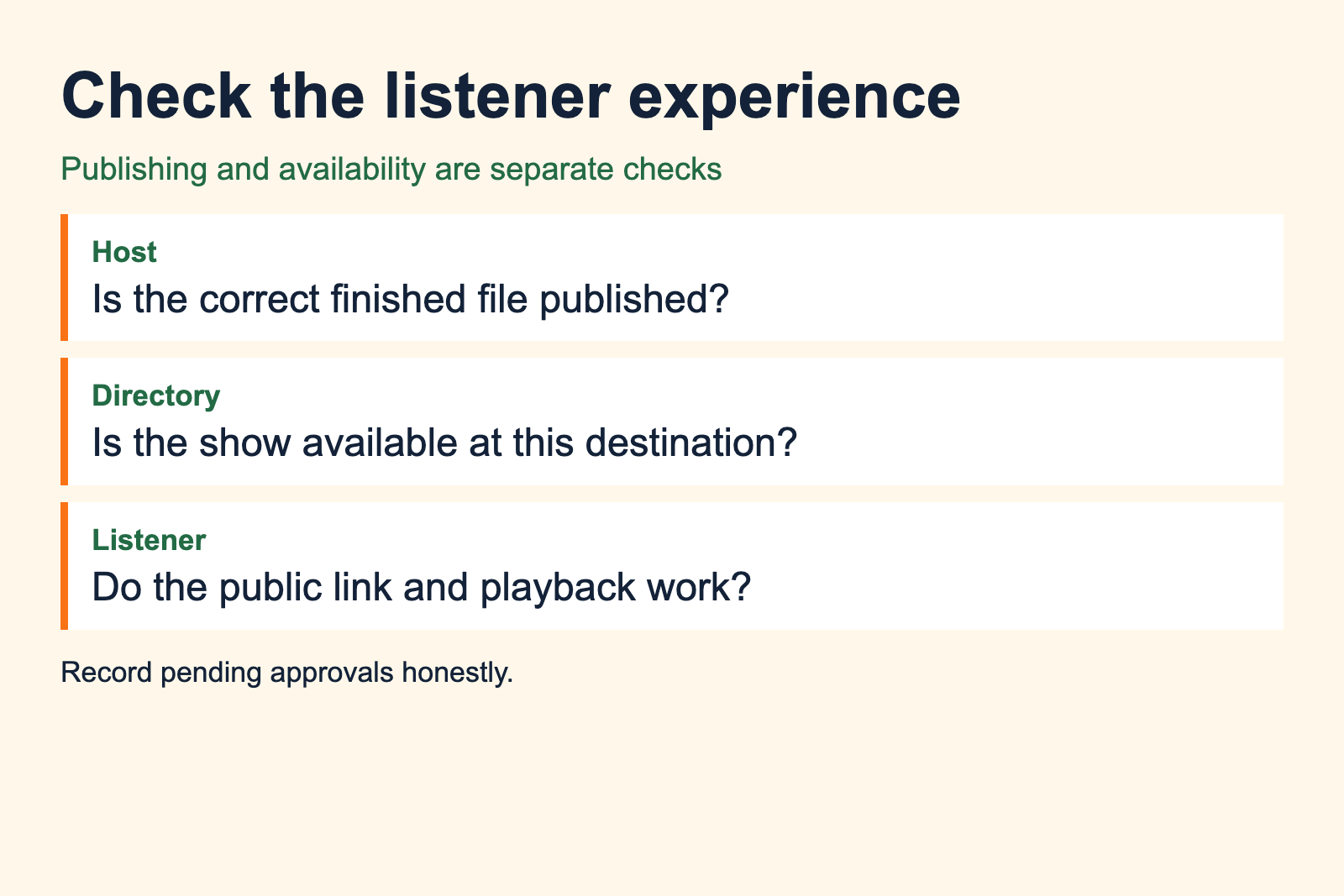
A podcast host stores your episodes and supplies the feed used for distribution. A listening directory is where an audience finds and plays the show. Keep those roles separate when following setup instructions.
For Spotify-hosted shows, the audio publishing guide lists MP3, M4A and WAV support and requires account verification before first publication. Add an accurate episode title and description, then choose immediate or scheduled release.
Apple’s submission guide explains adding a hosted RSS feed through Apple Podcasts Connect. Shows must pass technical validation and review before availability. Follow the current instructions for each destination you choose instead of assuming an upload places the episode everywhere.
Launch something you can maintain
Open the published episode as a listener. Check the title, description, playback and public link. Keep a record of destinations that are still waiting for approval or showing an older version.
Ask your pilot listener what they understood, where they lost interest and what they still wanted answered. Use that feedback to improve the next episode. Choose a release schedule that leaves enough time for reporting, recording and review alongside your other commitments.
Before settling on branding, work through the podcast-name screening exercise. Check the recording signal path before a session, then keep a strong passage for your audio portfolio.
Sources
- NPR, Planning the Story, teaching podcasting worksheet.
- Spotify Support, Recording and Editing an Episode; Publishing Audio Episodes.
- Apple Podcasts for Creators, Submit a New Show. Platform documentation checked September 2026.